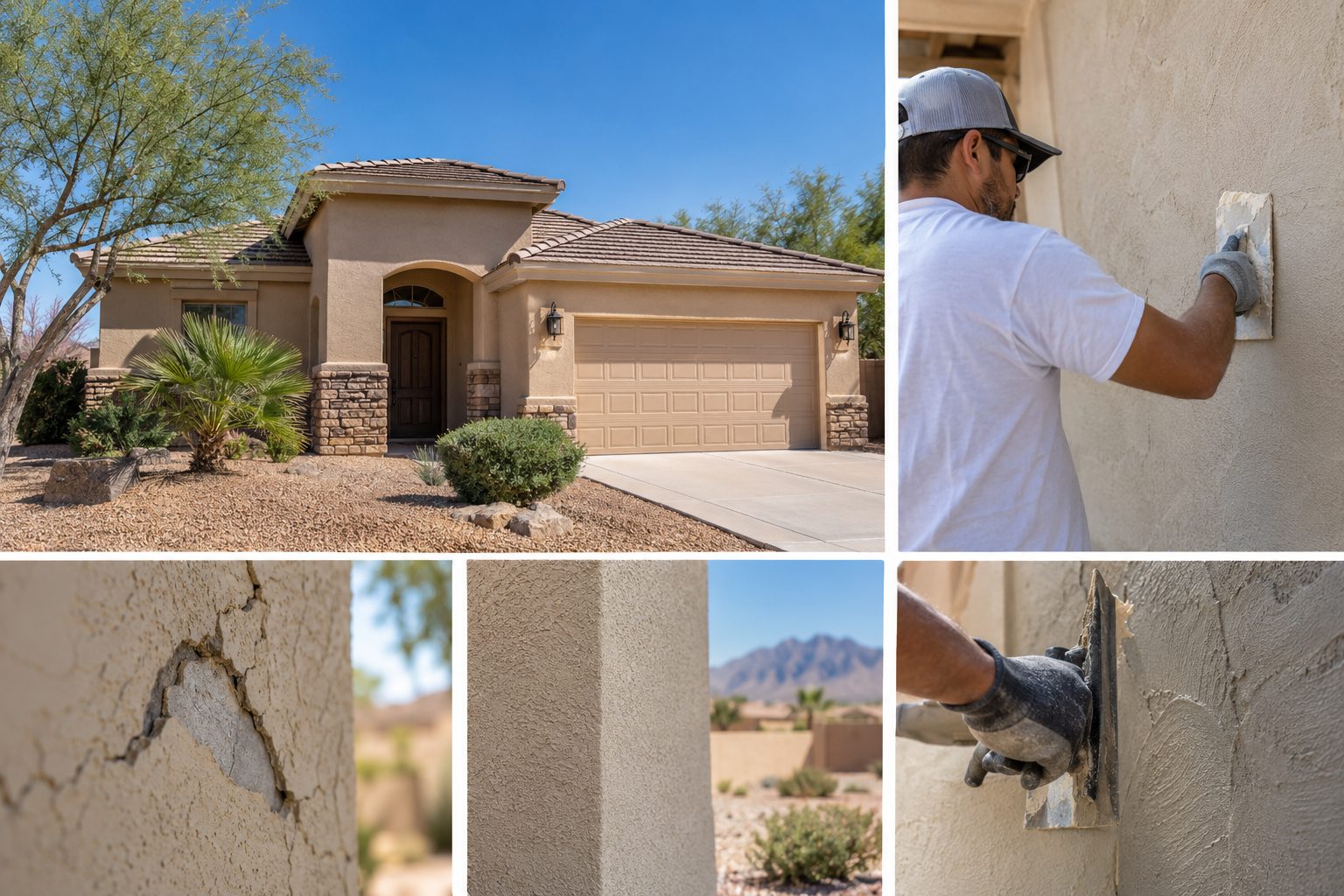
Repair Moisture-Damaged Stucco
Stucco Water Damage Remediation
Have stained or soft stucco checked before covering it. Get a Free Estimate
Repair Moisture-Damaged Stucco
Have stained or soft stucco checked before covering it. Get a Free Estimate
Water damage can hide behind a wall long before the exterior looks severe. Homeowners often first notice a dark stain, bubbling paint, white mineral deposits, a soft spot, or a crack that keeps returning. Those signs do not automatically tell us where the water started. Moisture may be related to roof drainage, flashing, windows, wall penetrations, irrigation, plumbing, or another building condition that needs to be addressed separately.
Our role is to deal with the damaged stucco once the moisture source has been identified or corrected. We remove visibly unsound exterior material as needed, assess how far the damage extends within the repair area, rebuild the stucco layers, and restore the exterior finish. Simply applying new stucco or paint over wet or deteriorated material can trap the problem beneath a fresh surface.
Arizona is dry much of the year, but stucco walls can still experience significant water exposure during monsoon storms, around roof drainage points, and where irrigation repeatedly hits the exterior. Moisture can also enter through failing sealant, openings around windows or penetrations, or conditions above the damaged area. We do not treat every stain as a stucco-only problem. The exterior finish should be repaired after the pathway for water has been considered, because rebuilding a wall while an active leak remains can lead to another failure.
Dark streaks, uneven patches, or recurring discoloration can point to repeated wetting. Some staining is superficial, but persistent marks deserve a closer look when they appear near cracks, roof transitions, windows, or irrigation areas.
Stucco that powders, flakes, or breaks easily may have lost strength. We remove material that is no longer sound rather than trying to stabilize a weak surface with a thin topcoat.
Paint or elastomeric coatings can bubble when moisture becomes trapped or when adhesion fails. The coating may need to be removed in the affected area so the condition of the stucco underneath can be evaluated.
Cracking combined with staining or softness deserves more attention than a dry cosmetic crack. The damaged area may need to be opened farther to create a stable repair.
Lower wall sections can deteriorate where landscaping, irrigation, splashback, or soil conditions keep them wet. Repair may include removing compromised material and rebuilding the finish after the source of repeated moisture is corrected.
Once roofing, flashing, plumbing, sealing, or another source has been corrected by the appropriate trade, we can restore the exterior stucco that was opened or damaged during the water event.
| Service | Estimated Cost | Average |
|---|---|---|
| Small localized moisture-damaged area | $650-$1,500 | About $1,000 |
| Moderate wall section remediation | $1,500-$3,500 | About $2,400 |
| Extensive exterior stucco rebuilding | $3,500-$8,000+ | About $5,000 |
Planning ranges vary widely because the visible stain may not show the full repair area. These amounts do not include unrelated roofing, plumbing, window, structural, or other trade work needed to stop the water source.
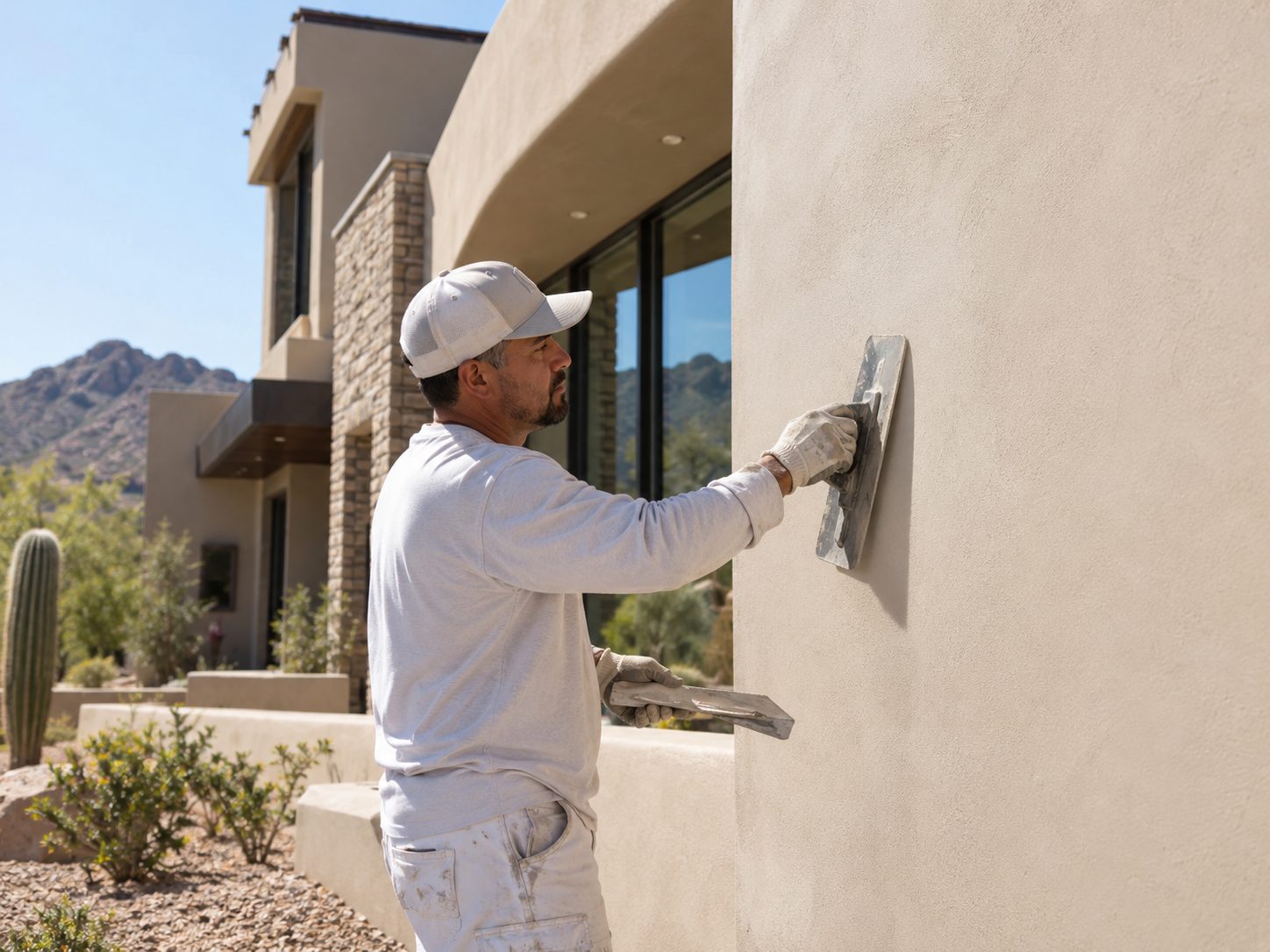
A fresh finish over soft or deteriorated material is not a real repair. Failed stucco needs to be removed where necessary before the area is rebuilt.
Stucco may show the damage even when the water began somewhere else. We encourage correction of the underlying source before the finish is closed up.
Where deeper material has failed, the repair is developed to restore the wall section rather than only smooth the outside surface.
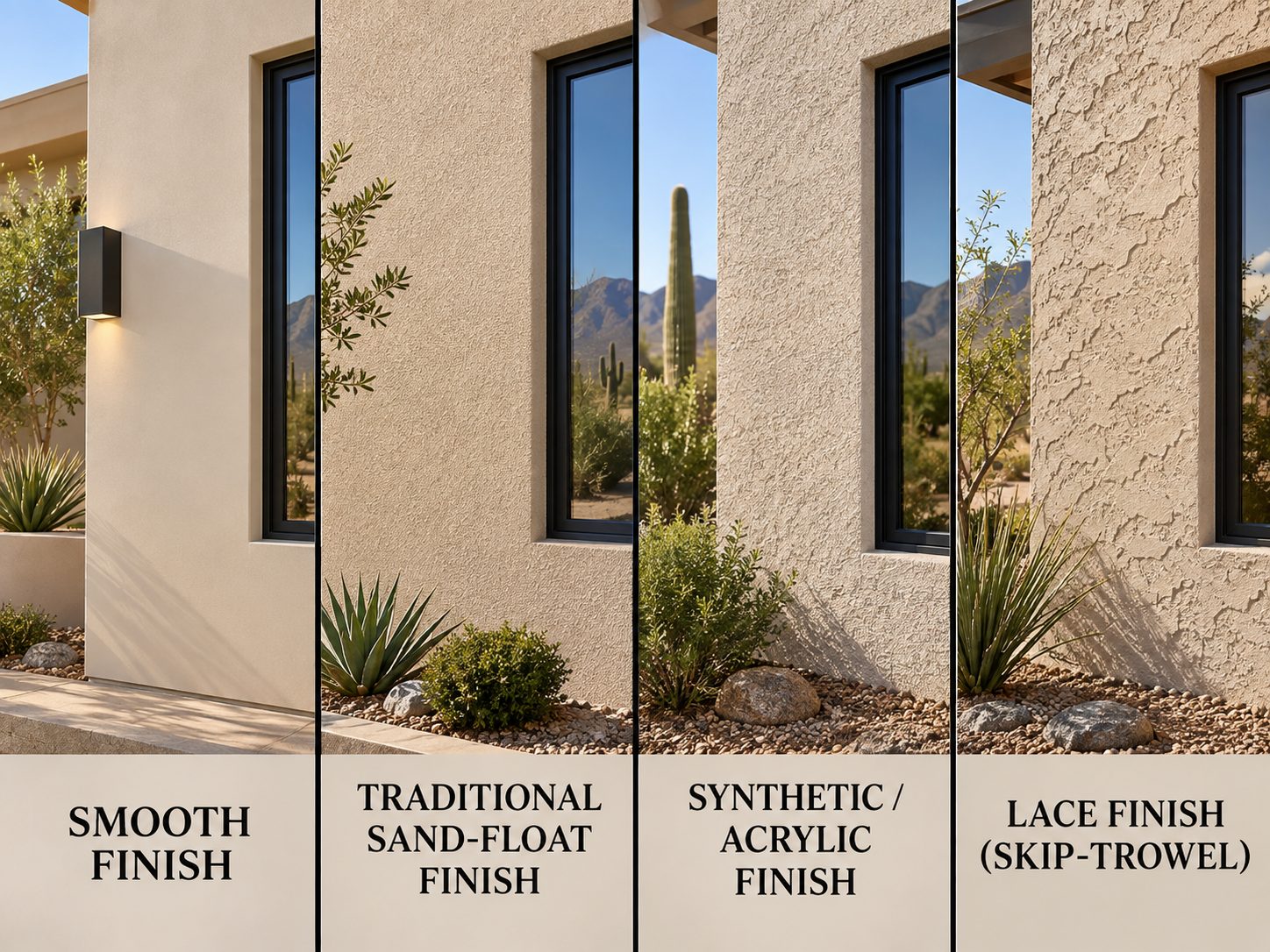
After damaged material is repaired, texture and coating decisions are made with the surrounding wall in mind.
If the damaged area changes after rain or irrigation, mention that when you contact us.
Free — no obligations

We identify staining, cracking, bubbling coatings, softness, and deterioration within the stucco repair area.
If an active leak or exterior water pathway remains, the appropriate correction should be made before permanent stucco restoration.
Unsound material is opened back to a stable repair boundary based on conditions encountered.
The wall area is restored using material and application steps appropriate for the existing stucco assembly.
The repaired surface is textured and, when included in the project, prepared for color matching or painting.